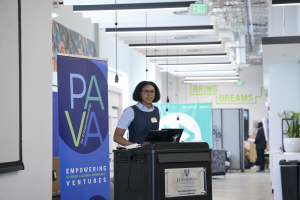
This spring, the Pava Marie LaPere Center for Entrepreneurship concluded another semester of accelerator programming highlighting student founders, researchers, and early-stage ventures advancing ideas across healthcare, AI, consumer products, financial technology, accessibility, and deep tech.
The showcases featured ventures from the Pava Center’s three flagship accelerator programs — Kindling, Spark, and Fuel — each supporting founders at different stages of company development.
Throughout the semester, teams refined business models, conducted customer discovery, developed prototypes, and presented their ventures before peers, mentors, judges, and members of the Johns Hopkins innovation ecosystem.
Kindling Showcase Encourages Early Exploration
The Kindling pre-accelerator supports students and innovators in the earliest stages of entrepreneurship, helping participants identify meaningful problems and explore potential venture pathways.
Some of this semester’s winning teams included:
- To the Pointe ($750): A collaboration platform designed to help composers and dancers build creative works together – Peabody
- Invasive BCIS ($650): A team exploring challenges and opportunities surrounding invasive brain-computer interfaces – WSE
- Harmful Compulsions ($650); A team focused on understanding and addressing harmful compulsive behaviors, including body-focused repetitive behaviors (BFRBs) – KSAS
Their presentations reflected the exploratory nature of the Kindling program, where participants are encouraged to investigate emerging technologies, unmet needs, and interdisciplinary solutions.
Spark Teams Advance from Concepts to Companies
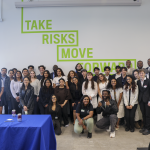 The Spark accelerator supports founders moving beyond ideation and into venture development, customer discovery, intellectual property strategy, and commercialization planning.
This spring’s first-place Spark winners, each receiving $2,000, included:
- Yano: Developing a financial identity infrastructure for West Africa – Carey, MBA
- AIDA: A diabetes decision engine app for patients that helps them make healthy decisions – WSE and BSPH
- DeltaP: Foley catheter alternative that monitors a patient’s bladder using a noninvasive, wearable device to test for AKI (acute kidney injury) – WSE
- Summercraft: A mushroom kombucha that has a science-first approach to functional beverages – BSPH
Second-place teams, each receiving $500, included:
- Projecto Alminé: An anime production company that creates cinema focused on afro-diasporic storytelling – Carey, MBA
- Slide Mobility: A wheelchair that moves in any direction – WSE
- Livena Biotherapies: A long-lasting technology for inhibiting Herpes simplex virus (HSV-1) – SOM, PhD
- Votify: An app that shows you personalized matches to political candidates based on your beliefs – Carey, MBA
Several founders described Spark as a turning point in helping transform research projects and personal ideas into structured businesses.
Founder of Livena, Bonita Powell, a PhD candidate in the Biochemistry, Cellular and Molecular Biology program, said the experience fundamentally changed how the team approached commercialization.
“I’m at the bench most of the time. I understand experiments, but I wasn’t familiar with the business,” Powell said. “Spark really helped us understand who our customer was, how to think about intellectual property, and how to structure a company.”
Powell, who previously participated in the Kindling pre-accelerator, said the progression through the Pava Center ecosystem helped the team significantly refine its venture strategy.
For entrepreneur and researcher June Sass, founder of Summercraft, the Spark experience also carried personal significance.
Originally launched from homemade wellness products sold through social media and local markets, Summercraft evolved into a science-driven consumer health venture informed by Sass’s microbiology background and growing public skepticism around unsupported wellness claims.
Sass said the Pava Center helped her recognize entrepreneurship as a viable pathway.
“No one has ever really given me that validation,” Sass noted. “The Pava Center has shown me that my impact can be so much more through entrepreneurship.”
Spark participant John Boafo, whose venture was inspired by financial challenges he observed in Ghana, said the program provided critical guidance and momentum for advancing the company’s next phase.
“You get resources and people who have done this over and over again giving you the right direction,” Boafo said.
Boafo noted that his team plans to use its funding to validate its proprietary credit scoring algorithm and continue developing its product prototype into a minimum viable product.
Fuel Showcase Highlights Commercialization-Ready Ventures
The Fuel accelerator, designed for more advanced startups preparing for growth and commercialization, concluded with teams pitching before judges and audience members for multiple awards.
This semester’s Fuel winners included:
- Lumenate: Judges Prize ($15,000): A novel AI-enables cystoscope designed for non-urologist providers to image bladder – WSE
- Neuro Safety Systems: Cohort Prize ($5,000): Develops neurotechnology to detect driver fatigue and distraction in real time and improve safety in fleet operations – WSE
- SafeSock: Audience Prize ($3,000): A sensor-lined foot sleeve with haptic feedback enabling continuous weight-bearing monitoring for lower limb surgical patients – KSAS
The Fuel showcase highlighted ventures addressing a range of technical and societal challenges while demonstrating increasing commercialization readiness, market validation, and founder traction.
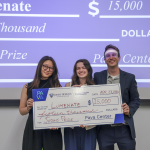 Jack Darbonne, founder of Lumenate, shared that his experience in Fuel helped connect to the local Baltimore and university entrepreneurial ecosystem and expand his network.
For upcoming entrepreneurs, Darbonne suggests “…surround yourself with people who make you excited to come in and work on your venture each day. While the top priority is to solve an unmet need, the best way to do that is by working with people you genuinely enjoy.”
From early-stage problem exploration to investment-ready startups, the semester’s cohort demonstrated how entrepreneurship at Johns Hopkins continues to expand across disciplines, technologies, and communities.