This article was originally published on the Johns Hopkins Magazine.
Hopkins researchers devised a method to measure antibody levels using glucometers, paving the way for accessible monitoring of infectious diseases
When someone gets an infectious disease like the flu or COVID-19, their immune system produces proteins called antibodies to fight off foreign particles that can make them sick. While many products that allow physicians to monitor our health—thermometers, scales, and flu test swabs—are cheap and readily available, measuring antibody levels is more complicated. Traditional tests, such as enzyme-linked immunosorbent assays, change colors if antibodies are present in a sample. But researchers typically need expensive optical equipment to measure the intensity of the color to determine how much antibody is present—not ideal when a pandemic calls for frequent, population-level screening or when monitoring the spread of infectious diseases in under-resourced communities.
Pandemic pivots
When COVID-19 shuttered much of the world, many researchers at Johns Hopkins University pivoted to address problems related to the pandemic. Netzahualcóyotl Arroyo Currás (Netz Arroyo), a leading expert in biology inspired sensors, teamed up with Jamie Spangler, a leader in protein engineering at Johns Hopkins, to propose a project that could fundamentally improve platforms used to detect antibodies.
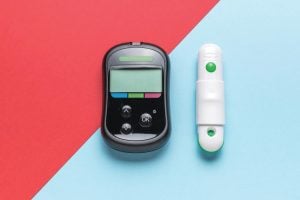
To address this challenge, the team proposed repurposing glucometers to detect COVID-19 antibodies, building on a concept that others had proposed before the pandemic. Glucometers are approved by the U.S. Food and Drug Administration and widely used in telehealth systems across the nation. They are also mass-produced, available over the counter, and standardized for helping people with conditions like diabetes monitor their blood sugar at home.
The team devised a new fusion protein, called LC15, that enables detection of infectious disease antibodies by measuring glucose levels. The technique means that anyone with a glucometer can measure levels of infectious disease antibodies, says Arroyo, who has since moved his lab to the University of North Carolina at Chapel Hill. The strategy offers a new way to monitor how infections spread in pandemics, he says.
The technique has also proven valuable in determining dosing when treating COVID-19 patients with convalescent plasma therapy. Doctors sometimes treat COVID-19 patients who have weakened immune systems with plasma extracted from blood samples of recovered COVID-19 patients. The ability to measure COVID-19 antibody levels is key in this type of treatment, underscoring the technology’s role in determining future treatment paths for infectious diseases.
Scaling up
Researchers are working to improve the technology so clinics can process several samples at the same time. The team switched from using the glucometer’s plastic strips to a 96-well plate format, according to research published in Sensors & Diagnostics. The format is more appealing for population screening of antibodies, which can guide public health policy during the next pandemic.
Likewise, researchers are looking for other ways to make it easier for clinical laboratories to use the technique, including by automating the glucose reading, which is currently manual. They aim to make the test more sensitive and to determine whether it can work for infectious diseases beyond COVID-19.
Arroyo says future implementation for clinical and public health use or commercial licensing by diagnostic laboratories would be markers of the technology’s success. But he’s also encouraged by interest from researchers in other countries in replicating his team’s work. “In a way, this scientific adoption beyond our labs is already a successful outcome,” Arroyo says.
The United States Patent and Trademark Office (USPTO) allowed claims covering this invention.