This article was originally published on the Hub.
The 2025 class includes 449 scientists, engineers, and innovators spanning 24 scientific disciplines who are being recognized for their scientifically and socially distinguished achievements
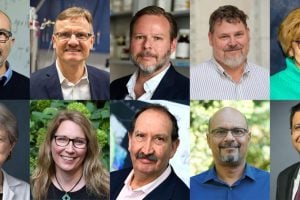
Ten Johns Hopkins University researchers are among 449 distinguished scholars elected to the newest class of fellows of the American Association for the Advancement of Science, or AAAS, the world’s largest general scientific society. Fellows are selected annually for their contributions to their respective fields and the body of science as a whole.
The 2025 class of fellows will be celebrated in Washington, D.C., on May 29.
The AAAS Fellows from Johns Hopkins are:
Emanuele Berti | Physics
Emanuele Berti is a professor in the Department of Physics and Astronomy in the Krieger School of Arts and Sciences. A theoretical physicist specializing in gravitational physics and gravitational-wave astronomy, his research centers on the structure and dynamics of black holes and neutron stars, and on preparing for space-based gravitational-wave detection with LISA (Laser Interferometer Space Antenna). Berti is a Fellow of the American Physical Society and currently serves as president elect of the International Society on General Relativity and Gravitation.
Collin Broholm | Physics
Collin Broholm is a professor in the Department of Physics and Astronomy in the Krieger School and director of the Johns Hopkins Institute for Quantum Matter. An experimental condensed matter physicist, his research focuses on anomalous forms of magnetism and superconductivity in materials where quantum effects are enhanced by competing interactions or low dimensionality, with neutron scattering as a primary tool. Broholm is a fellow of the American Physical Society and a Moore Experimental Investigator in Quantum Materials.
Jeff Coller | Medical sciences
Jeff Coller is the Bloomberg Distinguished Professor of RNA Biology and Therapeutics with appointments in the Whiting School of Engineering and the School of Medicine. His research has produced seminal discoveries in messenger RNA stability and translation, demonstrating that the genetic code is a major determinant of mRNA fate and reshaping our understanding of gene expression. He is co-founder of Tevard Biosciences and WyveRNA Therapeutics and holds numerous patents for RNA-based therapeutic applications.
David DeMille | Physics
David DeMille is a professor of physics and astronomy in the Krieger School. A world-leading atomic, molecular, and optical physicist, he has developed precision measurement techniques using polar molecules to search for new fundamental particles and forces and has pioneered methods to trap and cool molecular gases to ultralow temperatures. DeMille was elected to the National Academy of Sciences in 2024 and received the American Physical Society’s 2024 Norman F. Ramsey Prize.
Kalina Hristova | Biological sciences
Kalina Hristova is a professor of materials science and engineering in the Whiting School. Her research focuses on membrane protein folding and signal transduction, with a particular emphasis on receptor tyrosine kinases—proteins frequently dysregulated in cancer—for which she has developed novel quantitative methodologies to study their activation and function. Hristova is a fellow of the American Physical Society and the American Institute for Medical and Biological Engineering and a recipient of the Biophysical Society’s Dayhoff Award.
Noreen Hynes | Medical sciences
Noreen Hynes is director of the Geographic Medicine Center in the Division of Infectious Diseases at the School of Medicine. Her research and clinical work focus on the epidemiology and control of emerging and high-consequence infectious diseases, global health security, and One Health, and she directs the Johns Hopkins Hospital Biocontainment Unit. She also co-directs the Infectious Disease Concentration in the Bloomberg School of Public Health’s Master of Public Health program.
Erika Matunis | Biological sciences
Erika Matunis is a professor of cell biology at the School of Medicine. Using the fruit fly testis as a model system, her research investigates the molecular signals that govern whether germ line stem cells self-renew or differentiate into sperm, and her team recently discovered that cells committed to becoming sperm can be redirected back into stem cells. Matunis earned her PhD from Northwestern University and completed postdoctoral training at Rockefeller University.
Michael I. Miller | Engineering
Michael I. Miller is director of the Department of Biomedical Engineering and co-director of the Kavli Neuroscience Discovery Institute. A biomedical engineering professor specializing in computational medicine, his research develops tools to analyze brain imaging data in order to predict the risk of neurodegenerative and neuropsychiatric diseases, including Alzheimer’s disease, Huntington’s disease, and schizophrenia, years before clinical symptoms appear. He is a fellow of the American Institute for Medical and Biological Engineering, the Institute of Electrical and Electronics Engineers, and the Biomedical Engineering Society.
Rajat Mittal | Engineering
Rajat Mittal is a professor of mechanical engineering in the Whiting School. An expert in computational fluid dynamics, his research spans biomedical fluid mechanics, biological locomotion, and fluid–structure interaction, with applications ranging from cardiac biomechanics and heart valve modeling to swimming and flying in animals. Mittal is a fellow of the American Physical Society and the American Society of Mechanical Engineers and a recipient of the 2022 Stanley Corrsin Award and the 2021 Freeman Scholar Award.
Chirag R. Parikh | Medical sciences
Chirag R. Parikh is a professor of medicine and director of the Division of Nephrology at the School of Medicine. His research focuses on developing and validating novel biomarkers for the diagnosis and prognosis of acute kidney injury and diabetic kidney disease, and his work has refined clinical definitions of perioperative acute kidney injury and advanced regulatory approvals for kidney injury biomarkers. He has published more than 250 original articles, which have been cited more than 25,000 times.
Collin Broholm, Jeff Coller, Kalina Hristova, Michael Miller, Rajat Mittal, and Chirag Parikh all have inventions with JHTV.